
For SoCal nonprofits
Bring your hardest problem. We bring a room of builders.
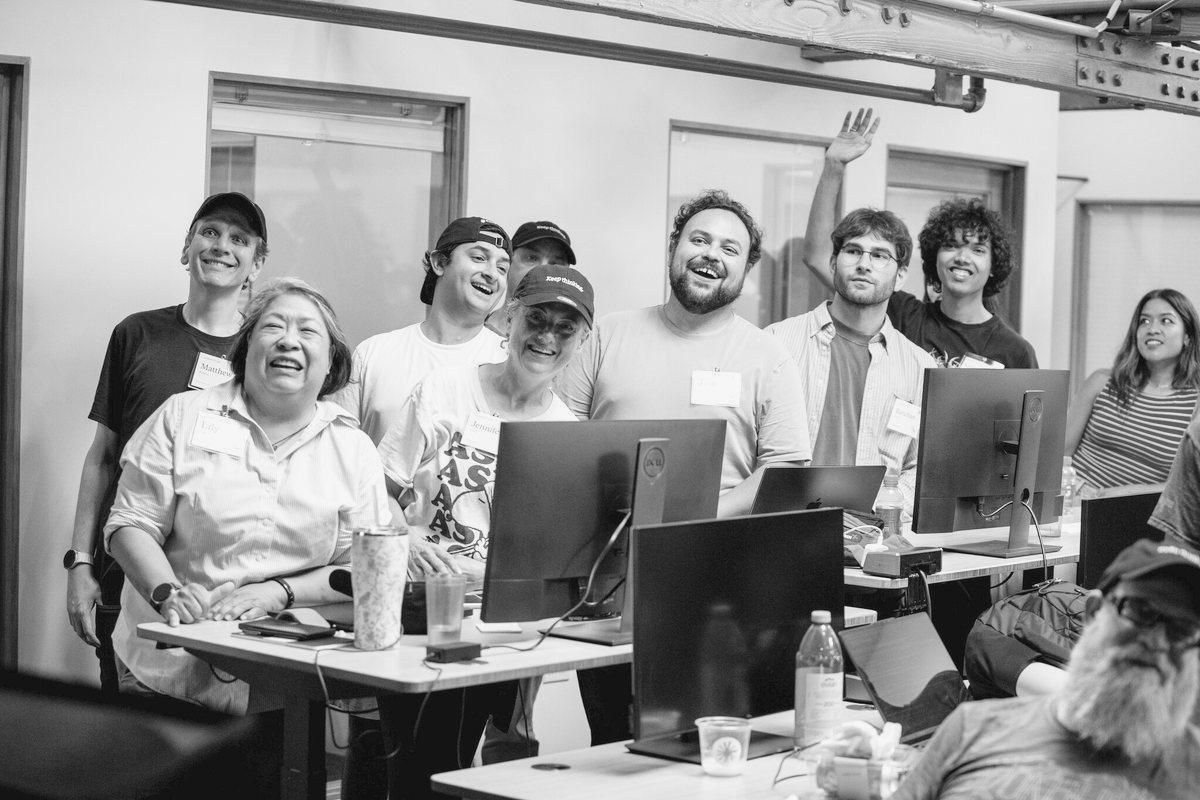
A Claude Impact Lab is a free, one-day build event. Your organization brings one real problem. Teams of local builders spend the day building working prototypes for it with Claude, then show you what they made.
Not with a nonprofit? If you have seen a problem in your community that builders should take on, tell us about it.
What your organization gets
There is no cost to your organization. Past SoCal labs have filled rooms with more than a hundred builders.
A full day on your problem
Developers, designers and domain experts form small teams and spend the day focused on the challenge you bring.
Working prototypes you keep
Every team demos what it built at the end of the day. You get the code and write-ups to keep, test with staff and build on.
A clear view of what AI can do for you
Your team sees AI applied to your real work rather than to a generic demo, and leaves with practical ideas for next steps.
New people in your corner
Meet local technologists who care about your mission. Some keep working with partners after the lab ends.
What we ask of you
A lab works when your organization is in the room and the problem is real. Here is what that takes.
- ProblemOne real problem: a task that eats staff hours, or a gap that keeps people from getting help. We help you narrow it down.
- PersonSomeone from your team joins a few short planning calls, presents the challenge at kickoff, answers questions during the day and watches the demos.
- DataExample, public or made-up data that builders can use safely. Never real client records. We help you prepare it.
- OpennessThe results are prototypes. They are a strong starting point, but they are not finished, supported software. Someone on your side looks at what comes out.
Open to 501(c)(3) nonprofits, fiscally sponsored projects, schools, libraries and public agencies serving communities in Southern California. Not sure you qualify? Send a request anyway.
Know a problem worth tackling?
You do not have to run a nonprofit to point us at a problem. Volunteers, staff, clients, teachers and neighbors often see the gaps first. Tell us what you have seen, and name the organization working on it if you know one. Every lab is built with a partner organization in the room, so we may ask you for an introduction.
Tell us about the problem
It takes about two minutes, whether you are with an organization or suggesting a problem you have seen. A Claude Ambassador reads every submission. If yours looks like a fit for an upcoming lab, we set up a short call. Submitting a request does not commit you to anything.
We use Supabase to store your request and Resend to email you a copy. Read our privacy notice.
While you wait, see upcoming events, or join the community to hear about the next lab.
What makes a strong challenge
The best challenges are specific and repetitive, and they affect real people. A team should be able to make visible progress on one in a single day. For example:
- Matching job seekers to openings they qualify for, along with the training that would get them there
- Turning paper or PDF intake forms into clean, searchable records
- Helping families work out which programs or benefits they are eligible for
- Drafting grant reports or donor updates from program data you already collect
- Answering the same volunteer or client questions in several languages
Problems that need real client records, a full production system or months of engineering are a poor fit for one day. They may still suit a later conversation.
Questions nonprofits ask
Does it cost anything?
No. Labs are free for the partner organization and for the builders who attend.
Do we need technical staff?
No. We need someone who knows the problem well. The builders and ambassadors take care of the technical side.
How much of our time does it take?
Usually a few short planning calls before the lab, plus the day itself. Your point person should be present for the kickoff and the demos at minimum.
What about our clients’ privacy?
Builders never see real client records. We work with you to prepare example, public or made-up data that has the same shape as your real data.
Will you publicize our organization’s name?
Only with your permission. We agree up front on what can be shared before, during and after the lab.
How do you choose?
We look at how clear and concrete the problem is, how ready your team is, and timing and location across SoCal. We run only a handful of labs each year, so we cannot promise every organization a date.
What if we are not chosen this time?
We keep your request on file for future labs. We may also suggest a smaller workshop or connect you with a builder in the community.
Who owns what gets built?
Teams usually publish their work as open code that your organization is free to use and adapt. We confirm the details with you before the lab.
Other questions? travis@claudesocal.com